
How a De-Accredited University Overstepped Its Mandate in the UAE
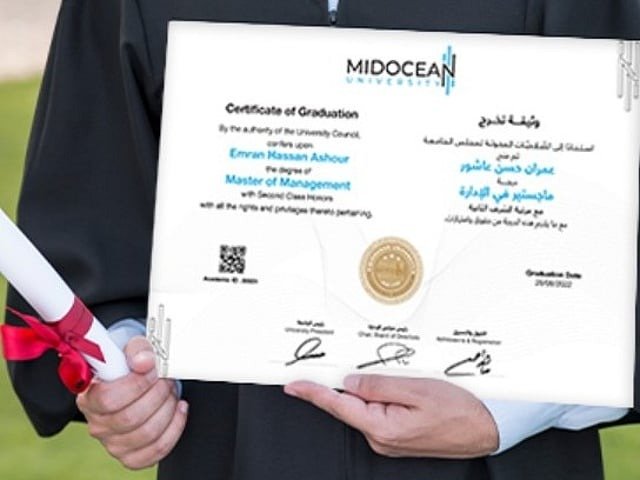
The UAE Ministry of Higher Education and Scientific Research (MoHESR) has withdrawn official recognition of all qualifications issued by Midocean University after uncovering serious violations linked to the institution’s Fujairah-based office. Authorities found that the office was operating well beyond its approved mandate, engaging in unlicensed educational activities that breached national higher education regulations.
The decision was announced earlier this week following a joint inspection by MoHESR and the Fujairah Free Zone Authority, which revealed fundamental compliance failures. These included unauthorised programme delivery, weak oversight mechanisms, and discrepancies between official submissions and on-ground operations.
A support office — on paper
According to information published on Midocean University’s official website, the Fujairah facility was registered as a “licensed operations centre”. Its stated role was limited to administrative and logistical functions such as infrastructure support, technology services, business continuity operations, and financial activities including collections and disbursements.
The university also states that all degree-awarding authority rests with its main campus in the United Republic of the Comoros, explicitly indicating that the UAE office had no responsibility for academic delivery. It remains unclear when the university last updated this information on its website.
On paper, the Fujairah office was positioned solely as a backend support facility — a distinction that carries clear legal and regulatory implications under UAE higher education law.
What investigators discovered
The on-ground reality, however, differed significantly from the university’s stated position. During inspections, authorities found that the Fujairah office was actively involved in student registration and educational programme operations, activities that require prior accreditation from MoHESR.
Officials determined that the office was conducting academic-related services without the necessary approvals, a direct violation of UAE regulations governing higher education institutions. In particular, the university was found to be offering online academic programmes without an approved quality assurance framework — a critical requirement under national standards.
Investigators also identified significant inconsistencies between the data submitted by the institution to regulators and what was observed during现场 inspections. Discrepancies were noted in student numbers, programme records, and operational practices.
Scope of programmes unclear
Midocean University’s website lists a total of 27 academic programmes, including:
Five bachelor’s degrees
15 master’s programmes
Seven PhD programmes
However, authorities have not confirmed how many of these programmes were marketed or delivered via the UAE office, nor how many students may have been enrolled or affected. This lack of transparency became a central concern during the ministry’s assessment.
Fundamental regulatory breaches
MoHESR concluded that the violations were not minor or administrative in nature, but fundamental breaches involving operational mechanisms, programme delivery controls, and compliance with nationally approved academic standards.
Following a detailed verification and technical evaluation, the ministry determined that the institution failed to meet the criteria required for recognition. As a result, MoHESR formally withdrew recognition of all academic qualifications issued by the university, regardless of where the degrees were delivered.
The university’s status has now been officially updated to “not accredited” in the ministry’s recognition registry, in line with established regulatory procedures.
About the institution
Midocean University describes itself as an investment arm of The Everyone’s Smart University Holding Group, registered in Saudi Arabia. The institution claims accreditation from the Ministry of Education in the United Republic of the Comoros and lists membership in the Association of Arab Universities.
The university also states that it offers its academic services globally, including through its Fujairah operations centre — a claim that became a focal issue in the investigation due to the mismatch between its licensing status and actual activities within the UAE.
Protecting students and academic integrity
In a statement, MoHESR stressed that the action reflects its commitment to protecting students, maintaining a trustworthy learning environment, and safeguarding the credibility of academic qualifications issued or promoted within the UAE.
The ministry reiterated that only institutions and programmes licensed and accredited by MoHESR are legally permitted to offer higher education services in the country. Unlicensed activities, officials warned, can mislead students and undermine confidence in the education sector.
MoHESR has urged students and parents to verify accreditation status before enrolling in any academic programme. Verification can be done through the ministry’s official website or by contacting its Customer Happiness Centre at 800 511.
The case underscores the UAE’s strict regulatory stance on higher education and serves as a reminder that operational transparency and compliance are non-negotiable requirements for institutions operating within the country.
Related News